
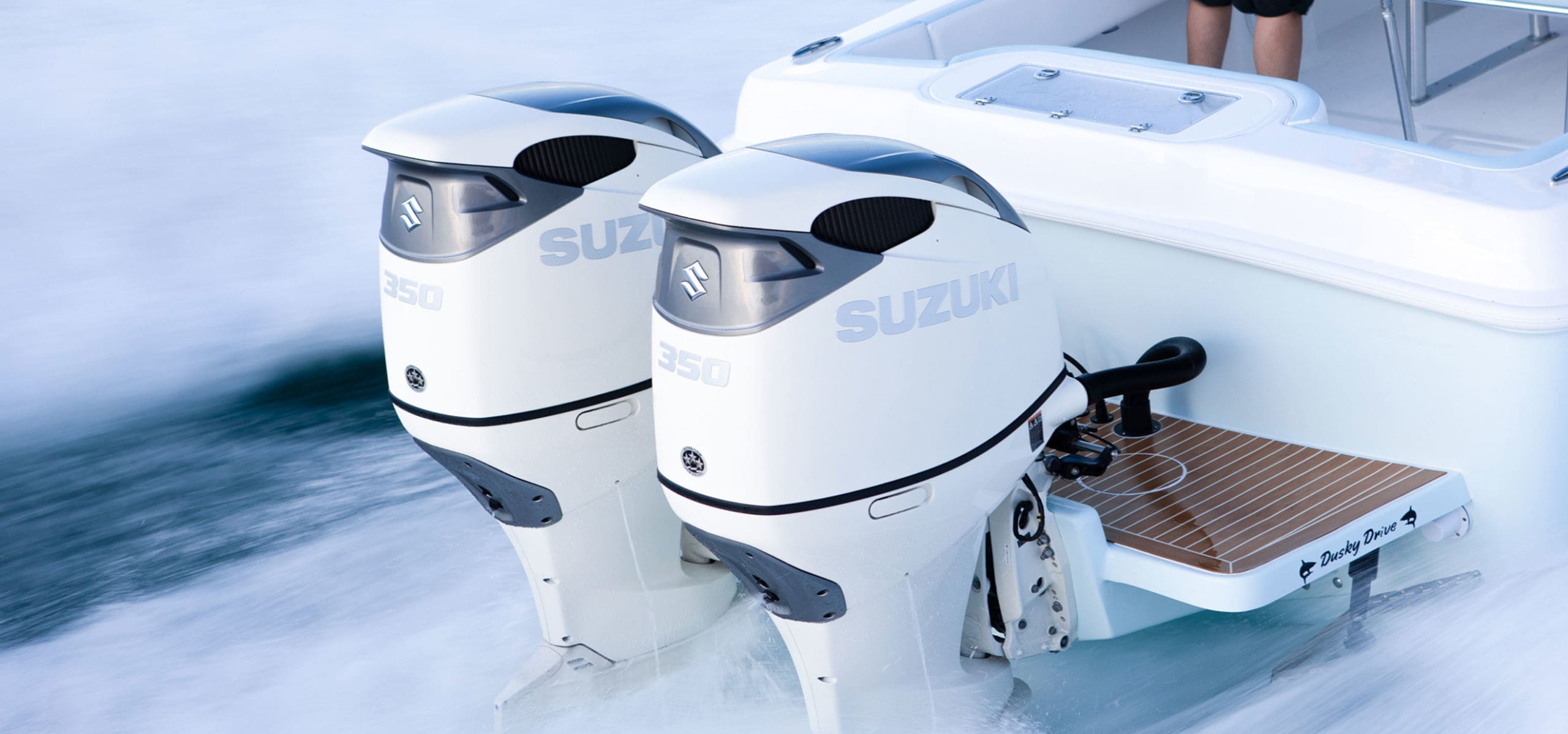
Suzuki Outboard Warranty: 7 Years vs the 3-Year Norm
Three years is what the outboard industry calls normal factory coverage. Through November 30, a new 150HP to 350HP Suzuki carries seven. That is more than double the category standard, and every one of those years is factory warranty rather than a service contract bolted on at the back.
Precision Marine has been an authorized Suzuki dealer in Largo longer than any shop on Tampa Bay. Here is what the difference actually buys you.
In short: Most major outboard manufacturers provide three years of limited factory warranty for pleasure use. Suzuki’s standard is five. Through November 30, new 150HP to 350HP Suzuki outboards bought for pleasure use carry seven years at no extra cost.
The Industry Standard Is Three Years
| Coverage | Typical major brand | Suzuki standard | Suzuki now, 150–350HP |
|---|---|---|---|
| Pleasure use | 3 years | 5 years | 7 years |
| Commercial or rental | 1 year | 1 year | 1 year |
Suzuki’s baseline already runs two years past the category norm. This promotion puts it at more than double. The commercial tier is where the industry converges: one year is close to universal, and no manufacturer extends a promotional warranty to engines earning revenue.
What a Warranty Document Actually Promises
A warranty is a manufacturer stating in writing how long it will pay to fix its own manufacturing and assembly mistakes. It is not a service plan, not a maintenance agreement, and not a promise that nothing breaks.
That is why every manufacturer, Suzuki included, excludes the same categories: wear items, accident damage, improper installation, corrosion from inadequate flushing, non-approved parts, contaminated fuel. None of those are manufacturing defects, and no brand covers them.
What varies is the term, and the term is a commercial decision informed by expected claim rates. A company setting seven years accepts seven years of exposure on every qualifying engine it sells. That is a meaningful signal about expected claim rates.
What it definitely changes is who pays. A powerhead failure in year six is either a warranty claim or a five-figure invoice, and the term is the only thing deciding which.
Factory Warranty vs Extended Service Plan
Understand this distinction before you compare any two offers, because seven years can mean two very different things.
Some long-coverage offers in this category reach their headline number by combining a shorter factory warranty with an extended service plan attached to the end. Those plans are insurance products. They carry their own administrator, their own terms, their own exclusions, and sometimes their own deductible. The claims process in year six is not the claims process in year two, and the two documents do not always define a covered failure the same way.
Suzuki’s seven years are seven years of factory limited warranty. One document. One claims process. One company behind the engine for the full term.
When a salesperson quotes you a long warranty on any brand, ask two questions: how many of those years are factory coverage, and is there a deductible on the back half?
What the Suzuki Outboard Warranty Covers Instead
Seven years against defects in materials and workmanship: internal engine components, the gearcase, electrical and fuel system components, and factory-installed hardware.
The clock starts the day your dealer retail-registers the engine rather than the day it left the factory, so an engine that sat in inventory arrives with its full term.
Suzuki Genuine Rigging bought and installed by an authorized dealer alongside the engine carries the same terms, which on a repower extends the coverage across the controls, harnesses and displays.
What Is Not Covered
- Wear items: impellers, anodes, spark plugs, filters, lubricants
- Accident, collision, submersion and misuse damage
- Improper installation or incorrect propeller selection
- Corrosion traced to inadequate flushing or storage
- Failures caused by non-approved parts, contaminated fuel, or skipped service
- Any engine run commercially on a pleasure-use registration
Which Suzuki Outboards Qualify
Every model from 150HP to 350HP, across three platforms. Stealth Line models qualify on identical terms, and shaft length, color, and control type make no difference.
In-Line Four: DF150A, DF175A, DF200A
A 2,867cc in-line four, square 97 x 97 mm bore and stroke, DOHC 16 valves, 10.2:1 compression. Gear ratio 2.50:1. Alternator 12V 44A. Oil pan: 8.0 liters. Transom heights: 20 and 25 inches.
- DF150A — 150HP, 110.0 kW, 5,000–6,000 rpm, props 15″ to 27.5″, standard rotation in three or four blades
- DF175A — 175HP, 5,500–6,100 rpm, props 17″ to 29″, 511 to 531 pounds depending on shaft and controls
- DF200A — 200HP, 147 kW, 5,500–6,100 rpm, props 17″ to 27.5″
All three carry variable valve timing, multi-stage induction, Lean Burn fuel management with oxygen sensor feedback on a 32-bit ECM, an offset driveshaft, a counterbalancer, a self-adjusting timing chain, a knock sensor, a water-detecting fuel filter, and CARB 3-Star Ultra-Low Emission certification.
V6: DF250AP and DF300AP
A 4,028cc 55-degree V6, DOHC 24 valves, 98 x 89 mm bore and stroke, 2.08:1 gearing, 54-amp alternator, 290 to 299 kg dry. The DF250AP makes 184.0 kW at 5,500–6,100 rpm. The DF300AP makes 220.7 kW at 5,700–6,300.
Selective Rotation is the standout. A switch flips the engine between standard and counter-rotation, removing the need for a dedicated counter-rotating motor on a twin rig. The platform also carries drive-by-wire Suzuki Precision Control, a two-way water inlet with a lower intake for shallow running, a long-track intake manifold, an 81 mm spherical bore throttle body, a fuel cooler and a low-drag gearcase.
Flagship V6: DF300B, DF325A, DF350A
A 4,390cc V6, 98 x 97 mm, chain-driven DOHC 24 valves, two-stage gear reduction at 2.29:1 allowing propellers from 12″ to 31.5″. Transom heights: 25 and 30 inches.
- DF300B — 300HP, 5,500–6,100 rpm, 87 octane, dual contra-rotating props, 727 pounds on the X shaft and 747 on the XX
- DF325A — 325HP, 239.0 kW, 5,300–6,300 rpm, AKI 87
- DF350A — 350HP, 257.4 kW, 5,700–6,300 rpm, AKI 89, dual contra-rotating props, 330 kg on the X shaft
Dual contra-rotating propellers split engine torque across two props. Suzuki runs a smaller, lower-drag gearcase and still puts more blade area in the water. The platform adds keyless start with a waterproof floating fob and immobilizer, Troll Mode, Easy Start, automatic trim by rpm, noise reduction through a silencer and resonator, and the SDSM+ app. Automatic trim and the app require an SMD or SMG4 display.
Matching Horsepower to the Hull
More power is not better by default, and over-powering a hull costs money at purchase and again at the fuel dock. Precision Marine matches this way:
- DF140 to DF200 for single-engine center consoles, dual-console runabouts and bay boats
- DF225 to DF300 for single-engine offshore boats and twin-engine mid-size center consoles
- DF325 to DF350 for flagship offshore center consoles, twin and triple installations, and large express cruisers
Transom rating, hull weight and real-world loading decide the final answer, which is what the consultation step is for.
Keeping the Full Term Intact
A long warranty is worth exactly as much as the service record behind it. Three intervals apply.
- 20-Hour Break-In, after the first 20 hours: engine and gear oils replaced with Suzuki fluids, oil filter changed, critical fasteners rechecked for torque, fuel and cooling systems verified. Never delay this one.
- 100-Hour / Annual, every 100 hours or one year: engine oil and filter, gear oil, spark plugs, fuel filters, plus inspection of the water-pump impeller, throttle and shift linkage, corrosion and wear, anodes and connections.
- 300-Hour Major, every 300 hours or three years: all 100-hour items plus impeller replacement, sacrificial anode replacement, valve clearance checks and a complete cooling-system service.
Precision Marine stocks the complete 20-hour kit for DF150 through DF300AP at $152.47 and the DF300B and DF350A kit at $174.53, both with ECSTAR 10W-40 and SAE 90 gear oil.
Routine maintenance you perform yourself does not void coverage, provided you use genuine Suzuki parts and log the work with dates and hours. Warranty repairs go through an authorized Suzuki dealer.
Saltwater on the Gulf Coast
Corrosion traced to inadequate flushing is excluded on every brand, which makes flushing the cheapest thing you can do to protect a seven-year term. Suzuki builds dual freshwater flush ports into its larger outboards to make it quick.
Anodes are inspected at 100 hours and replaced at 300. A boat living on a lift in salt water burns through them faster than the interval predicts, so check them sooner. Suzuki’s multi-layer anti-corrosion finishing on aluminum exterior components buys margin, not immunity.
Storage and the Off-Season
Year-round Gulf Coast running removes the winterizing question and leaves the storage one. An engine sitting more than a few weeks wants stabilized fuel, a full freshwater flush, storage in the fully down position so water drains from the gearcase and cooling passages, and a cover.
Suzuki storage and winterizing kits for the 150HP to 300HP range run $150.10 to $166.50 at Precision Marine, and engine storage covers roughly $125 to $168.
Fuel is the usual culprit after a layup. Ethanol blends absorb water, and contaminated fuel damage is excluded on every brand, so a stabilizer before a long sit is cheap insurance on an expensive engine.
How a Repower Works
Precision Marine runs Suzuki repowers in six steps:
- Consultation, where the team assesses the boat, the transom, and the existing rigging.
- Engine selection, matching horsepower to the hull and how you actually use it.
- A quote with transparent itemized pricing covering engine, installation, and rigging.
- Scheduling, with parts ordered in advance so the boat is not sitting in the shop waiting on a harness.
- Installation, covering mounting, rigging, wiring, controls, and gauges.
- A sea trial on the water before the boat goes back.
The package includes removing the old engine, mounting the new outboard, installing a gauge or digital display, prop sizing, and the sea trial. Timeline depends on horsepower, mechanical versus digital controls, and single versus twin, so a schedule comes with the quote.
On running costs, Suzuki Lean Burn predicts fuel requirements and runs a leaner mixture where conditions allow, with the biggest gains at cruise. Owners repowering from older engines report 20 to 40 percent better fuel economy.
Before November 30
The engine must be sold and delivered to the retail purchaser inside the promotional window. Suzuki prohibits the sale of boxed engines 40HP and larger, so every 150HP to 350HP purchase runs through a dealer quote and installation.
Precision Marine’s factory-trained team works out of 9111 130th Ave. N. in Largo, serving Tampa Bay, St. Petersburg, Clearwater, and Pinellas County. Request an engine quote or call (727) 518-2151, Monday through Friday, 9 AM to 5 PM.
Frequently Asked Questions
Which outboard brand has the best warranty?
Suzuki currently offers the longest factory coverage in the category. Standard Suzuki pleasure-use coverage is five years against an industry norm of three, and through November 30, new 150HP to 350HP models carry seven. When comparing brands, ask how many years are factory warranty and how many are an extended service plan.
Is the 7-year coverage a factory warranty or a service plan?
Factory warranty, for the full seven years, backed by Suzuki Marine USA. No service contract component. No fee.
How can I check the warranty on my Suzuki outboard motor?
Find the 12-digit serial number and model designator on the ID tag on the clamp bracket, then contact an authorized Suzuki dealer or Suzuki Marine Customer Relations for your registration date, tier, and remaining term.
Does a Suzuki outboard warranty transfer to a new owner?
Yes. Remaining coverage transfers when the required paperwork goes through Suzuki Marine USA within the specified window.
Does doing my own maintenance void the Suzuki warranty?
No, provided you use genuine Suzuki parts and keep dated records. Warranty repair work goes through an authorized Suzuki dealer.
Why is the commercial warranty so much shorter?
Commercial and rental engines accumulate hours several times faster than pleasure-use engines. The one-year term across the industry reflects duty cycle, not confidence in the product.
Does a longer warranty mean the engine is more reliable?
A warranty is a manufacturer’s statement about expected claim rates, not a guarantee for any individual engine. What it does change is who pays when something fails, and for how long.
Can I buy additional coverage beyond seven years?
Suzuki offers an extended protection product covering unexpected mechanical breakdowns and towing costs. Terms and eligibility come from an authorized dealer.
Does the warranty transfer add value when I sell?
More than it used to. On a three-year term, remaining coverage was usually gone before the first owner sold. On seven, a boat changing hands at year four still carries three years of factory coverage, and that is a real line item in a listing.
What is excluded on every brand?
Wear items such as impellers, anodes, spark plugs, and filters; accident, collision, and submersion damage; improper installation or propping; corrosion from inadequate flushing; non-approved parts; and contaminated fuel. These exclusions are close to universal.
Does a longer warranty cost more up front?
Not here. The Suzuki promotion applies at no extra cost and with no fees on qualifying purchases. That is the distinction from an extended service plan, which is a product you buy.
Do gauges and rigging carry the same term?
Suzuki Genuine Rigging bought and installed by an authorized dealer with the engine is covered on the same terms. On a seven-year warranty that extends to the controls, harnesses, and displays, not just the powerhead.
Can I get the promotion on a twin or triple rig?
Yes. Eligibility is per engine, so every qualifying 150HP to 350HP outboard in a multi-engine installation carries its own seven years.
What happens if I miss the deadline?
The engine reverts to Suzuki’s standard five years for pleasure use, which still leads the category. The two bonus years are gone.
Table of Contents
- 1 The Industry Standard Is Three Years
- 2 What a Warranty Document Actually Promises
- 3 Factory Warranty vs Extended Service Plan
- 4 What the Suzuki Outboard Warranty Covers Instead
- 5 Which Suzuki Outboards Qualify
- 6 Matching Horsepower to the Hull
- 7 Keeping the Full Term Intact
- 8 Saltwater on the Gulf Coast
- 9 Storage and the Off-Season
- 10 How a Repower Works
- 11 Before November 30
- 12 Frequently Asked Questions